Buying guide

Best stereo reverb pedals

By PedalBro · Updated October 9, 2026 · We do not test pedals, here is how we rank them

A stereo reverb is for players who run two amps or send a stereo signal to a mixing desk, so the reverb can spread across both sides instead of sitting in one speaker. When choosing one, weigh four things: how it handles your dry signal and bypass, how much power it needs, how many sounds it offers, and whether you want simple knobs or deeper control through presets, MIDI or an app.

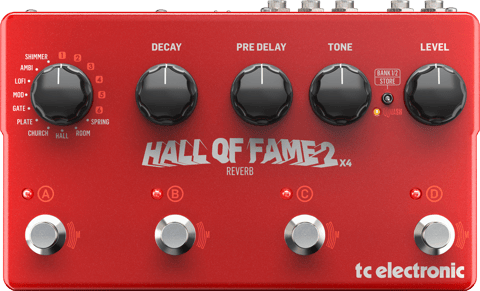
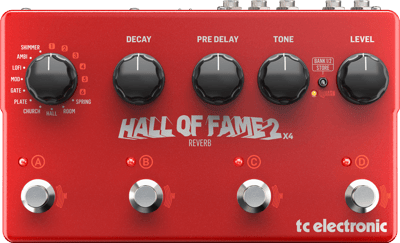
The TC Electronic Hall of Fame Reverb is the one we recommend for most people. It covers ten styles of reverb, from small rooms to springs and big ambient washes. It lets you choose how it bypasses, keeps your dry signal analog, and runs from an ordinary 9V supply. It is also among the cheapest pedals here, and Bonedo gave it 5 out of 5, praising its sound, sturdy build and value.

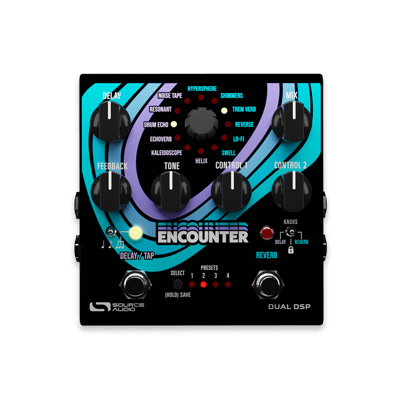
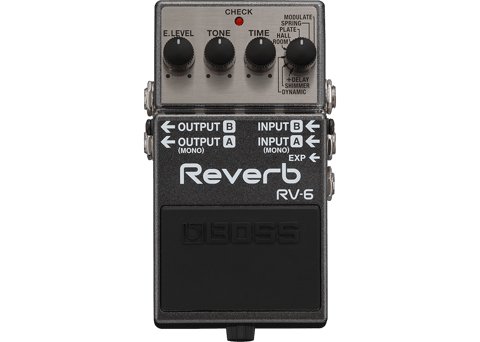
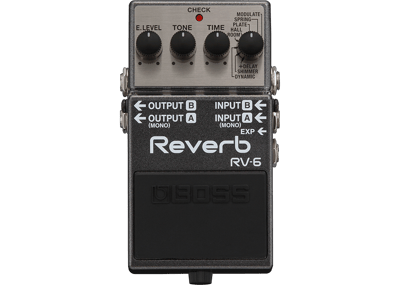
If you want the most for the least, the Boss RV-6 Reverb is our budget pick. It is just as cheap, adds an expression input and a reverb-only output for parallel setups, but uses buffered bypass. For players who want reverb and delay together with presets and MIDI, the Source Audio Encounter is the splurge, aimed squarely at strange, atmospheric sounds.

Everything we recommend

TC Electronic Hall of Fame Reverb guitar pedal

Top pick · Best for most stereo rigs that need a wide spread of reverbs at a low price

TC Electronic Hall of Fame Reverb

The TC Electronic Hall of Fame Reverb gives you ten kinds of reverb, TonePrint custom settings and switchable bypass, and Bonedo rated it 5 out of 5. But we would point anyone who wants MIDI, presets or effects beyond reverb toward the Source Audio Encounter.

Boss RV-6 Reverb guitar pedal

Budget pick · A good choice if you want simple, cheap stereo reverb with an expression jack

Boss RV-6 Reverb

The Boss RV-6 Reverb offers eight reverb styles, including shimmer and a reverb-delay blend, an analog dry path and an expression input at one of the lowest prices here. But we note that it uses buffered bypass and only three knobs, so control is limited.

Source Audio Encounter Ambient Delay + Reverb guitar pedal

Splurge pick · The step up if you want reverb and delay with presets, MIDI and deep editing

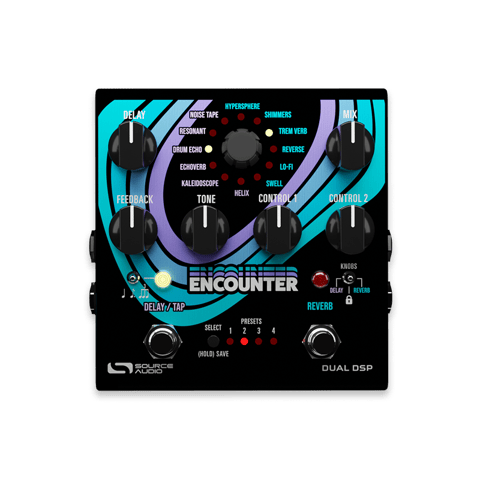
Source Audio Encounter Ambient Delay + Reverb

The Source Audio Encounter pairs reverb with a delay engine, stores presets and supports MIDI, and Guitar World, Guitar.com and Bonedo each rated it 4.5 out of 5. But we would only recommend it to players who enjoy unusual sounds and are happy to use an app.

What you need to know

  • Who this is for

    This guide suits guitarists who already run a stereo rig, or plan to, and want reverb that takes advantage of it. If you only play into one amp, any of these pedals will also work in mono, but you would be paying for a feature you will not use. Players who want a fully analog reverb will not find one here, since every pick is digital.

  • Bypass and the dry signal

    The TC Electronic Hall of Fame Reverb and the Source Audio Encounter both have switchable bypass, while the Boss RV-6 Reverb uses buffered bypass. The Hall of Fame and RV-6 both keep the dry signal analog, so only the reverb passes through the digital circuit.

  • Power draw

    The Hall of Fame and the RV-6 sip modest current from a standard 9V center-negative supply, and both can take a battery. The Encounter needs 300 mA, so check that your power supply has an outlet with that much to spare.

  • Knobs versus deep editing

    The RV-6 keeps things to three knobs that each move several settings at once, which is quick but limited. The Encounter adds presets, MIDI and a software editor, and reviewers say the app is where much of its depth lives.

  • Range of sounds

    The Hall of Fame offers ten reverb types and the RV-6 offers eight, including shimmer and a reverb blended with delay. The Encounter pairs reverb with a separate delay engine and leans toward unusual textures rather than plain room sounds.

  • How we picked

    We looked at every pedal that fits this guide and is on sale new today, then ranked them by what reviewers and buyers say, how many sources say it, and what it costs. The full method is here.

  • What we do not do

    We do not test pedals. Everything here comes from published reviews, retailer ratings and player discussion, so you can follow it back to its sources.

How we researched this guide

PedalBro is an index of guitar pedals, not a testing lab. For this guide we gathered the published reviews, retailer star ratings and player discussion we hold for every pedal that fits, turned them into a single PedalBro score, and ranked the pedals on that score, how many sources stand behind it and price. A person reads every guide before it is published. 71 pedals fit this guide and 34 of them had a score we could rank.

TC Electronic Hall of Fame Reverb guitar pedal

Top pick: TC Electronic Hall of Fame Reverb

Best for most stereo rigs that need a wide spread of reverbs at a low price

  • Stereo
  • Digital
  • Switchable (true or buffered)
  • 72.6 × 121.9 mm
  • 9V DC

PedalBro score 86/100 · 2 sources, high confidence

Reviewers rate it highly across the board. Bonedo gave the TC Electronic Hall of Fame Reverb a perfect 5 out of 5, singling out its sound quality, robust construction and the value it offers, and listed nothing it disliked.

It covers a lot of ground for one of the cheapest pedals here. You get ten reverb styles, including room, hall, plate and spring, and TonePrint lets you load custom settings beyond the ones printed on the pedal. That is two more reverb types than the Boss RV-6 Reverb offers at a similar price.

It handles stereo setups sensibly. The dry signal stays analog, you can choose how the pedal bypasses, and Bonedo noted a kill-dry option, which helps when the pedal sits in a parallel loop or feeds a mixing desk. It runs from a standard 9V supply and can also take a battery.

Flaws but not dealbreakers

The Hall of Fame Reverb does reverb and nothing else, and every sound is digital. If you want delay in the same box, the Source Audio Encounter covers both, and nobody looking for an analog reverb will be satisfied here.

The spec sheet lists no expression input or MIDI. The Boss RV-6 Reverb has an expression jack, and the Encounter offers both expression and MIDI.

Who should skip it: Skip the TC Electronic Hall of Fame Reverb if you want presets, MIDI or a delay engine alongside your reverb, in which case the Source Audio Encounter fits better.
Boss RV-6 Reverb guitar pedal

Budget pick: Boss RV-6 Reverb

A good choice if you want simple, cheap stereo reverb with an expression jack

  • Stereo
  • Analog
  • Buffered bypass
  • 73 × 130.2 mm
  • 9V DC

PedalBro score 87/100 · 1 source, medium confidence

The Boss RV-6 Reverb gives you a lot of variety for very little. Its eight algorithms run from spring and plate to shimmer, modulated reverb and a setting that mixes delay with reverb, which covers both everyday and more atmospheric playing.

It is easy to fit into a stereo rig. It works in mono or stereo, keeps your dry signal analog, and can send out only the wet reverb for parallel routing. That last feature is useful if you run a dry amp alongside a wet one.

It does one thing the TC Electronic Hall of Fame Reverb cannot: the expression input lets you ride the reverb level with your foot as you play. Power needs are ordinary, a standard 9V center-negative supply, and it can run on a battery.

Flaws but not dealbreakers

Bypass is buffered rather than switchable, unlike the Hall of Fame Reverb and the Source Audio Encounter. If you want your signal untouched when the pedal is off, that matters.

With just level, tone and time knobs, each controlling several things depending on the mode, fine tuning is limited. Nothing in the product information mentions presets or MIDI, so players who want to store and recall settings should look at the Encounter.

Who should skip it: Skip the Boss RV-6 Reverb if you want switchable bypass, in which case the TC Electronic Hall of Fame Reverb is the better buy at a similar price.

Source Audio Encounter Ambient Delay + Reverb guitar pedal

Splurge pick: Source Audio Encounter Ambient Delay + Reverb

The step up if you want reverb and delay with presets, MIDI and deep editing

  • Stereo
  • Digital
  • Switchable (true or buffered)
  • 111.8 × 56 × 116.8 mm
  • 9V DC

PedalBro score 81/100 · 3 sources, medium confidence

Three publications agree it is excellent. Guitar World, Guitar.com and Bonedo each gave the Source Audio Encounter 4.5 out of 5, with Guitar.com calling its sounds strange and wonderful and praising how easy it is to operate.

It does far more than the other two picks. You get two engines, one for reverb and one for delay, that you can switch between, along with savable presets, MIDI, an expression input and spillover so trails do not cut off when you change sounds. Guitar World liked the wide range of sounds and the software editor and librarian.

It is well suited to stereo. It takes stereo in as well as out, and Bonedo praised its flexible routing options and clear layout. If your stereo rig is built around atmospheric soundscapes, this is the pedal that leans hardest into them.

Flaws but not dealbreakers

The Encounter favors the unusual. Guitar.com warned that players wanting conventional reverb may not get on with it, and Guitar World said the app is needed to unlock everything it can do. The TC Electronic Hall of Fame Reverb is a better fit for natural rooms and halls.

It costs much more than the other picks, draws 300 mA and takes up more board space than the Boss RV-6 Reverb. Bonedo also noted that split stereo routing could not yet be switched on from the pedal itself.

Who should skip it: Skip the Source Audio Encounter if you mainly want natural, everyday reverb, which the TC Electronic Hall of Fame Reverb delivers for much less.

Other pedals we considered

These did not make the top three, but some of them are the right choice for the right player.

  • Walrus Audio Slö

    If you want dreamy, ambient textures: the Walrus Audio Slö has three modes built around a lower octave, swelling reverb and a held pad, and Guitar.com and Bonedo each rated it 4.5 out of 5. It does not offer plain, natural reverbs, and it uses buffered bypass, so we picked the more versatile pedals above.

  • Hotone Verbera

    The Hotone Verbera earned 5 out of 5 from MusicRadar, which praised its sound, ease of use, and Clone and Freeze features, plus both algorithmic and impulse-response reverbs. It has MIDI and an expression input, but it rests on that one review, and the same reviewer disliked where the MIDI ports sit and found its spring sounds weaker.

  • MXR Reverb

    The MXR Reverb is a small, low-draw digital reverb with six algorithms, an expression input and switchable bypass, and Premier Guitar gave it 4.5 out of 5. It lists no MIDI or presets and costs more than the TC Electronic Hall of Fame Reverb, which offers more reverb types.

  • Strymon Cloudburst

    If you want harmonically rich, frozen ambience: the Strymon Cloudburst adds harmonics through its Ensemble engine, can hold notes indefinitely and has MIDI, USB and kill-dry, and Bonedo gave it 5 out of 5. It is among the dearest pedals here and draws 250 mA, so we preferred the Source Audio Encounter as the splurge for its broader reviewer support and added delay engine.

  • Keeley Electronics Nocturne

    If you want stored presets with familiar spring and plate sounds: the Keeley Electronics Nocturne, Andy Timmons' signature reverb, has 72 MIDI presets, six controls including pre-delay and a high-pass filter, and 4.5 out of 5 ratings from Premier Guitar and Bonedo. Premier Guitar noted MIDI needs a special DIN to TRS cable or adapter, and Bonedo found presets cannot jump between reverb modes.

Questions people ask

How did PedalBro choose these stereo reverb pedals?

We started with stereo reverb pedals currently sold new that have at least one published review or retailer rating, which left 34 of 71 pedals with a review score. We then weighed how well reviewers rated each one, how many sources backed that up, and where it sits on price. That is how the TC Electronic Hall of Fame Reverb, Boss RV-6 Reverb and Source Audio Encounter came out on top for their roles.

Which of these stereo reverb pedals have switchable bypass?

The TC Electronic Hall of Fame Reverb, Source Audio Encounter, MXR Reverb and Keeley Electronics Nocturne all have switchable bypass. The Boss RV-6 Reverb, Walrus Audio Slö and Hotone Verbera use buffered bypass.

Which stereo reverb pedals need a stronger power supply?

The Source Audio Encounter draws 300 mA and the Strymon Cloudburst draws 250 mA, so both need a power supply outlet with plenty of current. The TC Electronic Hall of Fame Reverb, at 90 mA, and the Boss RV-6 Reverb, at 95 mA, run happily from a standard 9V supply.

Which stereo reverb pedals have MIDI?

The Source Audio Encounter, Hotone Verbera, Strymon Cloudburst and Keeley Electronics Nocturne all list MIDI. Neither the TC Electronic Hall of Fame Reverb nor the Boss RV-6 Reverb lists it.

Can the Boss RV-6 Reverb be used in mono?

Yes. The Boss RV-6 Reverb works in mono or stereo, and it can also output only the reverb signal if you want to run it in parallel.

Some buy links are affiliate links, so PedalBro may earn a commission when you buy, at no cost to you. As an Amazon Associate PedalBro earns from qualifying purchases. We do not take payment to rank or feature a pedal. Prices are the lowest new price we see now and change often: check the seller. How we rank