Buying guide

Best cheap reverb pedals

By PedalBro · Updated October 9, 2026 · We do not test pedals, here is how we rank them

A cheap reverb pedal is for the player who wants space and depth on a board without spending much. Under $150, the choices that matter are stereo or mono, how many reverb types you get, and how simple the pedal is to dial in.

Buy the Walrus Audio Fundamental Ambient. It offers three distinct ambient voices, needs only three faders to set up, and reviewers rate it very highly. Guitar.com awarded it a full 5 out of 5, and players keep praising its sound and its value.

If you want to spend less, the JOYO R-14 Atmosphere packs in nine modes and costs among the least here. If you need stereo or a wider spread of classic reverb types, the Boss RV-6 Reverb is the step up, and it is the only pick with stereo.

Everything we recommend

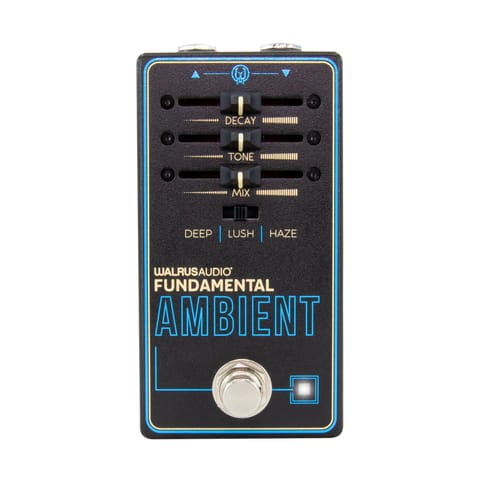
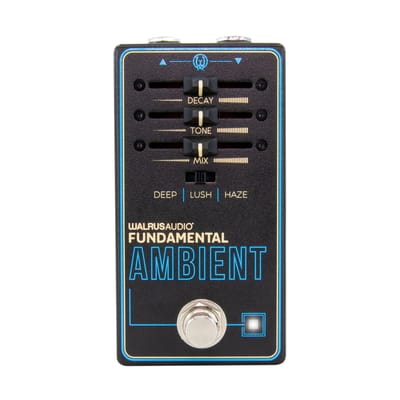
Walrus Audio Fundamental Ambient guitar pedal

Top pick · Best for players who want beautiful ambient reverb with almost no learning curve

Walrus Audio Fundamental Ambient

The Walrus Audio Fundamental Ambient gives you three inspiring ambient voices from a few faders, and reviewers rate it among the best reverbs at its price. But we would point stereo users to the Boss RV-6 Reverb, because this one runs in mono.

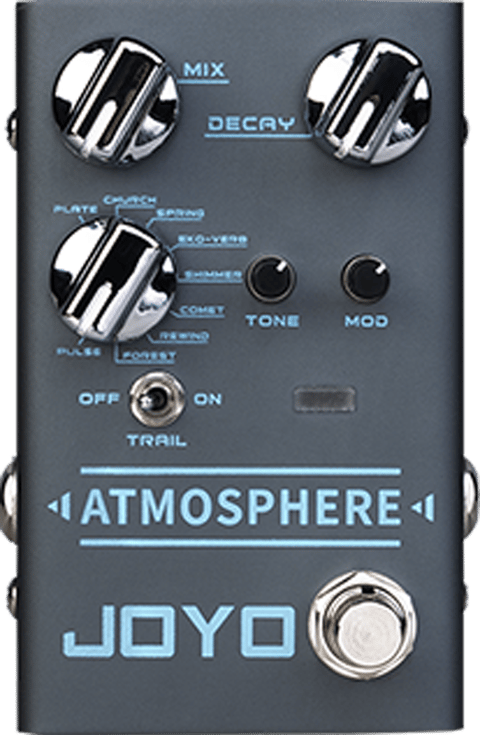
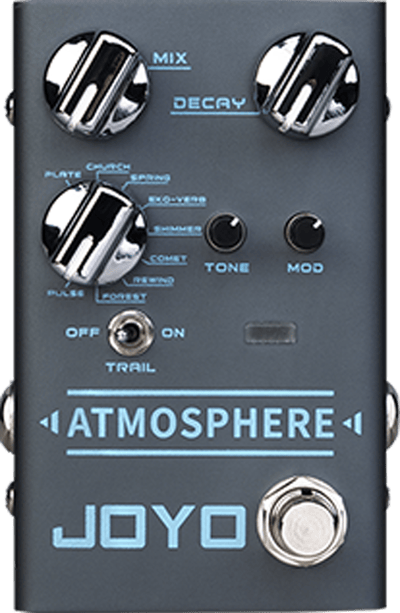
JOYO R-14 Atmosphere guitar pedal

Budget pick · A good choice if you want the most reverb variety for the least money

JOYO R-14 Atmosphere

The JOYO R-14 Atmosphere is among the cheapest pedals here yet offers nine modes with modulation and a sturdy build. But we have less independent opinion on it than on the Walrus Audio Fundamental Ambient, and it lacks stereo.

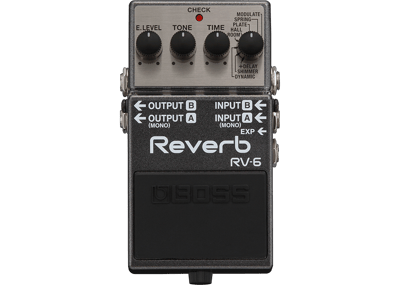
Boss RV-6 Reverb guitar pedal

Upgrade pick · The step up if you need stereo or a full range of reverb types

Boss RV-6 Reverb

The Boss RV-6 Reverb covers eight algorithms, from spring and plate to shimmer, and it is the only pick that runs in stereo. But we find it the dearest and bulkiest of the three, with just three knobs for shaping sound.

What you need to know

  • Who this is for

    This guide suits guitarists who want a reverb that sounds good and stays within $150, whether that means lush ambient washes or more familiar rooms and halls. If your rig runs in stereo, go straight to the Boss RV-6 Reverb, since the other picks are mono. Players after deep editing of every parameter may find all of these a bit basic.

  • Stereo or mono

    The Boss RV-6 Reverb is the only pick that works in stereo. The Walrus Audio Fundamental Ambient and the JOYO R-14 Atmosphere each run a single signal path, which is fine for one amp.

  • How many sounds you get

    The Walrus offers three ambient voices, the Boss has eight algorithms that range from spring to shimmer, and the JOYO has nine modes. More modes mean more variety, but the Walrus is the easiest to learn.

  • Bypass and trails

    The Walrus and the Boss both use a buffered bypass rather than true bypass. The Walrus and the JOYO let the reverb fade naturally when you switch the effect off.

  • Size and power

    The Walrus is the smallest and lightest of the three picks, and the Boss is the largest. All three run from a standard 9V supply and can take a battery, and the JOYO draws the most current at 140 mA.

  • How we picked

    We looked at every pedal that fits this guide and is on sale new today, then ranked them by what reviewers and buyers say, how many sources say it, and what it costs. The full method is here.

  • What we do not do

    We do not test pedals. Everything here comes from published reviews, retailer ratings and player discussion, so you can follow it back to its sources.

How we researched this guide

PedalBro is an index of guitar pedals, not a testing lab. For this guide we gathered the published reviews, retailer star ratings and player discussion we hold for every pedal that fits, turned them into a single PedalBro score, and ranked the pedals on that score, how many sources stand behind it and price. A person reads every guide before it is published. 75 pedals fit this guide and 22 of them had a score we could rank.

Walrus Audio Fundamental Ambient guitar pedal

Top pick: Walrus Audio Fundamental Ambient

Best for players who want beautiful ambient reverb with almost no learning curve

  • Mono
  • Digital
  • Buffered bypass
  • 58.7 × 112.8 mm
  • 9V DC

PedalBro score 83/100 · 3 sources, medium confidence

Reviewers love it. Guitar.com awarded it a full 5 out of 5 and called its sounds musical and inspiring, while Bonedo's rating was 4.5 out of 5, with praise for solid construction and a clear, uncomplicated layout. Players echo that, singling out its tone, its value and how quickly it makes sense.

It is easy to get a good sound from it. A slide switch moves between three ambient characters that each lean a different way, and three faders handle the length of the tail, its brightness and the wet-dry balance. The tone fader behaves differently in each voice, so it is more useful than its simple look suggests.

It sits in the middle of this list on price yet draws more critical praise than the cheaper JOYO R-14 Atmosphere. It is also smaller and lighter than either other pick, and trails stay on out of the box, so the reverb dies away naturally when you click it off.

Flaws but not dealbreakers

It works in mono, which Guitar.com named as its single weakness. If you play through two amps or a stereo rig, the Boss RV-6 Reverb is the pick that supports that.

The bypass is buffered, not true bypass, and shaping is limited to three faders plus the voice switch. Players wanting spring, plate or hall sounds may find three ambient voices narrower than the eight on the Boss.

Who should skip it: Skip it if you need stereo or classic spring and plate tones, in which case the Boss RV-6 Reverb fits better.
JOYO R-14 Atmosphere guitar pedal

Budget pick: JOYO R-14 Atmosphere

A good choice if you want the most reverb variety for the least money

  • Mono
  • Analog
  • 71.4 × 109 mm
  • 9V DC

PedalBro score 78/100 · 1 source, medium confidence

Bonedo is upbeat about it, rating it 4.5 out of 5. The reviewer liked its rugged construction, its fresh design and the quality of its sounds, and singled out the delay mode and the low price.

It gives you lots of choice for very little. Nine modes, some with modulation, cover more ground than the three voices on the Walrus Audio Fundamental Ambient, and you still get decay and tone controls for shaping the result.

It handles switching gracefully. A trail setting lets the reverb fade out after you turn it off, and it can run from a battery as well as a standard 9V supply.

Flaws but not dealbreakers

Evidence is thin. Only one published review stands behind it, and there is little detail available on how each mode sounds, so watch demos before buying.

It runs in mono and draws 140 mA, the most of any pick, so check that your power supply has enough current. It is also a little larger than the Walrus.

Who should skip it: Skip it if you want a pedal with a stronger track record from reviewers, where the Walrus Audio Fundamental Ambient is the safer buy, or if you need stereo, where the Boss RV-6 Reverb fits.

Boss RV-6 Reverb guitar pedal

Upgrade pick: Boss RV-6 Reverb

The step up if you need stereo or a full range of reverb types

  • Stereo
  • Analog
  • Buffered bypass
  • 73 × 130.2 mm
  • 9V DC

PedalBro score 87/100 · 1 source, medium confidence

It covers the most ground. Its eight algorithms include classic spring, plate, hall and room sounds along with shimmer, modulated reverb and a delay-and-reverb blend, which is far broader than the ambient focus of the Walrus Audio Fundamental Ambient.

It fits more complex rigs. It works in mono or stereo, can send out just the wet signal for parallel setups, and has an expression input so you can change the reverb level with your foot. The dry signal stays analog while the reverb itself is digital.

It costs among the most on this list, but no other pick offers stereo, and it draws only 95 mA, the lowest of the three picks.

Flaws but not dealbreakers

There are only three knobs, each moving several settings at once depending on the algorithm, so fine control over individual parameters is limited. The bypass is buffered, not true bypass.

It is the largest and heaviest of the three picks, and there is less published opinion on it than on the Walrus. Presets and MIDI are not mentioned in its specs.

Who should skip it: Skip it if you only run one amp and want a simpler, cheaper pedal, where the Walrus Audio Fundamental Ambient is the better buy.

Other pedals we considered

These did not make the top three, but some of them are the right choice for the right player.

Questions people ask

Do I need a stereo reverb pedal?

Only if you play through two amps or a stereo rig. Among our picks, the Boss RV-6 Reverb is the one with stereo; the Walrus Audio Fundamental Ambient and the JOYO R-14 Atmosphere are mono, which works fine with a single amp.

Which cheap reverb pedal is best for shimmer sounds?

The Boss RV-6 Reverb includes a shimmer algorithm alongside classic types. The JHS Pedals 3 Series Octave Reverb is built entirely around octave layers, and the Fender Marine Layer Reverb has a shimmer variant too.

Can these reverb pedals run on a battery?

Yes. The Walrus Audio Fundamental Ambient, the JOYO R-14 Atmosphere and the Boss RV-6 Reverb can all use a battery or a standard 9V supply. The JOYO draws the most current of the three at 140 mA.

Is buffered bypass a problem on a reverb pedal?

For most players it is not a dealbreaker. The Walrus Audio Fundamental Ambient and the Boss RV-6 Reverb both use buffered bypass, so if you specifically want true bypass, neither will suit you.

How did PedalBro choose these reverb pedals?

We looked at reverb pedals sold new for $150 or less that had at least one published review or retailer rating. We then weighed their review scores, how many sources stood behind each one and where it sat on price, and picked the Walrus Audio Fundamental Ambient, the JOYO R-14 Atmosphere and the Boss RV-6 Reverb.

Some buy links are affiliate links, so PedalBro may earn a commission when you buy, at no cost to you. As an Amazon Associate PedalBro earns from qualifying purchases. We do not take payment to rank or feature a pedal. Prices are the lowest new price we see now and change often: check the seller. How we rank