Buying guide

Best bass fuzz pedals

By PedalBro · Updated October 16, 2026 · We do not test pedals, here is how we rank them

Bass players who add fuzz usually run into the same problem: the effect eats the bottom end and the band loses its foundation. The features that solve this are a way to mix your clean signal back in and a voicing built for low notes. Size, power draw and extras such as an octave or a noise gate come next.

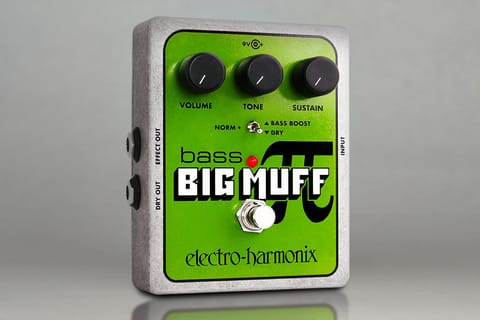
The Electro-Harmonix Bass Big Muff Pi is the one to buy. It earned 4.5 out of 5 from both Premier Guitar and Guitar.com. A single switch can either add weight or bring your untouched bass back under the fuzz. It also has a dedicated output for the dry signal, and it is one of the cheapest pedals here.

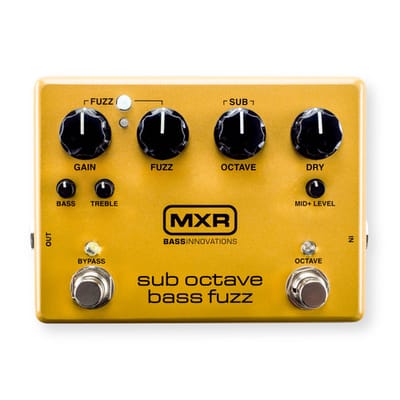
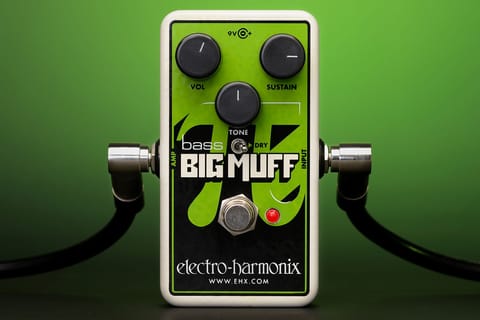
The Electro-Harmonix Nano Bass Big Muff Pi is the budget choice for a crowded pedalboard. It keeps the clean-blend idea in a smaller, lighter box. If you want an octave below your notes along with the fuzz, the MXR Sub Octave Bass Fuzz is the step up, though it costs more.

Everything we recommend

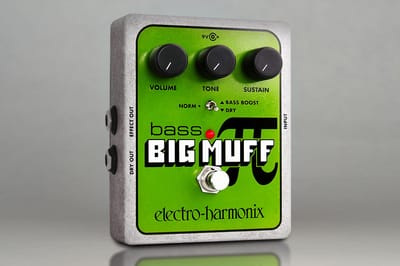
Electro-Harmonix Bass Big Muff Pi guitar pedal

Top pick · Best for most bassists who want heavy fuzz without losing their low end

Electro-Harmonix Bass Big Muff Pi

The Electro-Harmonix Bass Big Muff Pi delivers thick fuzz, a switch to keep your clean bass underneath and an extra jack for the dry signal, at one of the lowest prices here. But we would point you elsewhere if you want gentle, understated grit, because reviewers say it pushes toward big tones.

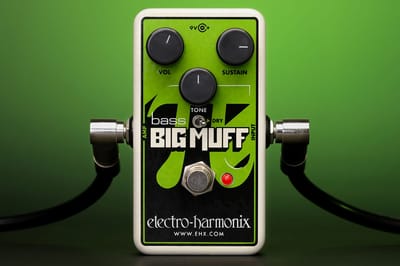
Electro-Harmonix Nano Bass Big Muff Pi guitar pedal

Budget pick · A good choice if pedalboard space is tight and you want a simple bass fuzz

Electro-Harmonix Nano Bass Big Muff Pi

The Electro-Harmonix Nano Bass Big Muff Pi fits a bass-friendly Big Muff with a clean-blend switch into a small box that barely draws any power. But we think the full-size Bass Big Muff Pi is worth the extra space for its boost setting and separate dry output.

MXR Sub Octave Bass Fuzz guitar pedal

Splurge pick · The step up if you want fuzz with an octave-down voice beneath it

MXR Sub Octave Bass Fuzz

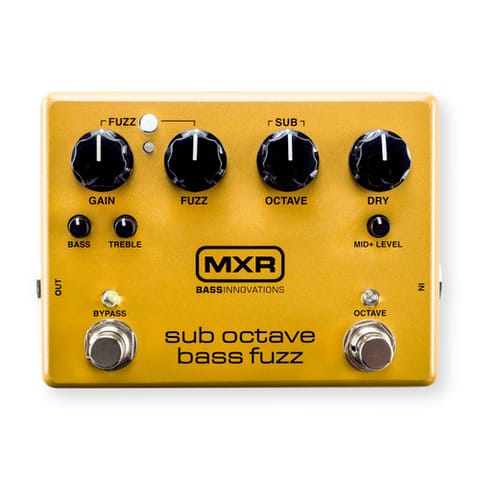
The MXR Sub Octave Bass Fuzz pairs fuzz with an octave below your notes, tuned to follow low frequencies, which neither Electro-Harmonix pick can do. But we would check its controls before buying, because published detail on them is scarce and it is among the priciest pedals here.

What you need to know

  • Who this is for

    This guide suits bassists who want thick, heavy fuzz while keeping a solid low end under it. If you want only light grit, reviewers say the Big Muff options lean toward big tones. If you need a noise gate, filters or a DI output in the same pedal, look at the alternatives further down.

  • Keeping your clean bass

    Each of the three picks can mix unaffected bass back in with the fuzz, which keeps notes solid in a mix. The Electro-Harmonix Bass Big Muff Pi also has a separate jack for the dry signal, so you can send it to its own amp.

  • Pedalboard space

    The Electro-Harmonix Nano Bass Big Muff Pi measures 71.6 x 114.3 mm, which is much smaller than the full-size Bass Big Muff Pi at 106.4 x 120.7 mm. The Electro-Harmonix Deluxe Bass Big Muff Pi is the largest at 154.2 x 120.7 mm.

  • Power draw

    The Nano draws 4 mA and the Bass Big Muff Pi draws 7 mA, so both are easy to power and kind to batteries. Both MXR pedals draw 25 mA. Every pedal here runs on a standard 9V center-negative supply.

  • Extra effects

    The two Electro-Harmonix picks are fuzz only. The MXR Sub Octave Bass Fuzz adds an octave-down voice. Among the alternatives, the MXR Bass Fuzz Deluxe offers a gated mode, and the Deluxe Bass Big Muff Pi has a gate, filters and a DI output.

  • How we picked

    We looked at every pedal that fits this guide and is on sale new today, then ranked them by what reviewers and buyers say, how many sources say it, and what it costs. The full method is here.

  • What we do not do

    We do not test pedals. Everything here comes from published reviews, retailer ratings and player discussion, so you can follow it back to its sources.

How we researched this guide

PedalBro is an index of guitar pedals, not a testing lab. For this guide we gathered the published reviews, retailer star ratings and player discussion we hold for every pedal that fits, turned them into a single PedalBro score, and ranked the pedals on that score, how many sources stand behind it and price. A person reads every guide before it is published. 13 pedals fit this guide and 6 of them had a score we could rank.

Electro-Harmonix Bass Big Muff Pi guitar pedal

Top pick: Electro-Harmonix Bass Big Muff Pi

Best for most bassists who want heavy fuzz without losing their low end

  • Analog
  • 106.4 × 120.7 mm
  • 9V DC

PedalBro score 81/100 · 3 sources, high confidence

Reviewers rate it highly. Premier Guitar and Guitar.com each gave it 4.5 out of 5. Premier Guitar praised how compact and enjoyable it is. Guitar.com singled out the bass voicing, the blend and boost options, and how easy it is to operate.

It is built to keep your low end intact. One switch setting mixes your clean signal back in with the fuzz, another adds extra weight, and the middle position leaves the circuit as designed. A dedicated output also carries the dry bass, so you can send it to a separate amp or signal chain.

It gives you more than the Electro-Harmonix Nano Bass Big Muff Pi for a similarly low price, because it adds the boost setting and the dry jack. It uses true bypass and draws only 7 mA. It can also run on a battery.

Flaws but not dealbreakers

The Guitar.com reviewer found it difficult to keep its tones restrained, so it is not the pedal for light dirt. It is also fuzz only: there is no octave like the MXR Sub Octave Bass Fuzz offers.

It takes up more room than the Nano. It measures 106.4 x 120.7 mm, against 71.6 x 114.3 mm for the smaller pedal.

Who should skip it: Skip it if you want an octave-down effect in the same box, since the MXR Sub Octave Bass Fuzz is built for that.
Electro-Harmonix Nano Bass Big Muff Pi guitar pedal

Budget pick: Electro-Harmonix Nano Bass Big Muff Pi

A good choice if pedalboard space is tight and you want a simple bass fuzz

  • Analog
  • 71.6 × 114.3 mm
  • 9V DC

PedalBro score 69/100 · 2 sources, high confidence

Guitar World gave it 4.5 out of 5. The reviewer liked that its huge fuzz can be reined in when needed, and that a short list of controls still covers a lot of ground. The reviewer also found it works well on guitar.

It is the easiest pick to fit on a board. At 71.6 x 114.3 mm and 220 g, it is the smallest of the three picks. It draws just 4 mA, the lowest figure here.

It still protects your bottom end. A switch blends your unprocessed bass in with the fuzz, and the price is among the lowest in this guide.

Flaws but not dealbreakers

Changing the battery means removing four screws, which Guitar World named as its only complaint. If you run on batteries and swap them often, that gets tedious.

The control set is basic: three knobs and a dry switch. You do not get the bass boost or the extra dry jack of the Electro-Harmonix Bass Big Muff Pi, and fewer reviews stand behind it.

Who should skip it: Skip it if you want more tone options or a dedicated dry output, since the Electro-Harmonix Bass Big Muff Pi adds both at a similarly low price.

MXR Sub Octave Bass Fuzz guitar pedal

Splurge pick: MXR Sub Octave Bass Fuzz

The step up if you want fuzz with an octave-down voice beneath it

  • Analog
  • 124 × 54 × 92 mm
  • 9V DC

PedalBro score 67/100 · 2 sources, medium confidence

Premier Guitar gave it 4 out of 5. The reviewer described the mix of octave and fuzz as a forceful combination.

Its octave tracking is designed for bass frequencies. That matters, because the effect has to follow low notes cleanly to sound solid.

It is an analog pedal made in the USA. It runs from a standard 9V supply or a battery.

Flaws but not dealbreakers

It costs more than the other picks, and only one review stands behind it. Its 4 out of 5 is also below the 4.5 scores the Electro-Harmonix pedals received.

Published specs say little about its controls or bypass type, so confirm both before you buy. It also draws 25 mA, far more than the 7 mA of the Electro-Harmonix Bass Big Muff Pi.

Who should skip it: Skip it if you only need straight fuzz with a clean blend, since the Electro-Harmonix Bass Big Muff Pi does that for less.

Other pedals we considered

These did not make the top three, but some of them are the right choice for the right player.

  • Electro-Harmonix Deluxe Bass Big Muff Pi

    If you want a noise gate, filters and a DI output in one unit: the Electro-Harmonix Deluxe Bass Big Muff Pi adds all three, plus a pad for active basses. Premier Guitar gave it 4.5 out of 5 and thought the extras make it a better value than the standard model. We left it out of the top picks because it is far larger, costs more and uses buffered rather than true bypass.

  • Darkglass Duality Fuzz DFZ

    If you want two fuzz voices you can mix together: the Darkglass Duality Fuzz DFZ blends silicon and germanium circuits in a compact box. It earned 4 out of 5 from Premier Guitar and 4.5 out of 5 in two Bonedo reviews, which praised its sound and build. It is among the most expensive options, though. One Bonedo reviewer disliked where the power jack sits, and the other found parts of its operation awkward.

  • MXR Bass Fuzz Deluxe

    If you want gated, synth-flavored fuzz: the MXR Bass Fuzz Deluxe offers a wet/dry blend and a Dry Gate mode, and Premier Guitar rated it 4.5 out of 5. That review says little about how it performs, so there is less to go on than for our picks, and it costs more than the Electro-Harmonix choices.

Questions people ask

Why does a clean blend matter on a bass fuzz?

Fuzz tends to strip away low frequencies. Mixing your unprocessed bass back in keeps the bottom solid. The Electro-Harmonix Bass Big Muff Pi, the Nano Bass Big Muff Pi, the Deluxe Bass Big Muff Pi, the MXR Bass Fuzz Deluxe and the Darkglass Duality Fuzz DFZ all offer some form of blend.

Can I use these bass fuzz pedals on guitar?

Some, yes. Guitar.com said the Electro-Harmonix Bass Big Muff Pi works on guitar too, if in a less conventional way. Guitar World found the Nano Bass Big Muff Pi works well on guitar as well. The MXR pedals are positioned for bass.

Do these pedals run on batteries?

Yes, every pedal in this guide can run on a battery as well as a 9V center-negative supply. On the Electro-Harmonix Nano Bass Big Muff Pi, reaching the battery means taking out four screws, according to Guitar World.

Which bass fuzz pedal adds an octave?

The MXR Sub Octave Bass Fuzz combines fuzz with an octave below your notes, tuned to follow bass frequencies. None of the Electro-Harmonix pedals in this guide offers an octave.

How were these bass fuzz picks chosen?

We looked at pedals currently sold new that have at least one published review or retailer rating. We then weighed their review scores, how many sources back them up and where they sit on price. That is why the well-reviewed, low-priced Electro-Harmonix Bass Big Muff Pi comes first.

Some buy links are affiliate links, so PedalBro may earn a commission when you buy, at no cost to you. As an Amazon Associate PedalBro earns from qualifying purchases. We do not take payment to rank or feature a pedal. Prices are the lowest new price we see now and change often: check the seller. How we rank