Buying guide

Best bass distortion pedals

By PedalBro · Updated October 16, 2026 · We do not test pedals, here is how we rank them

Bassists who want real grit usually run into the same problem: most drive pedals thin out the bottom of the signal. A good bass distortion keeps the low end solid underneath the dirt, either through a circuit voiced for bass or a control that brings your clean tone back in. Beyond that, decide how much control you want, how much board space you can give up and whether your power supply can feed the pedal.

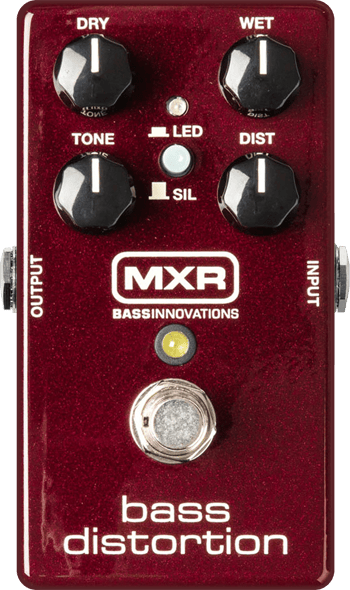
The MXR Bass Distortion is the one to buy. It is an analog, US-made pedal built specifically for bass, and its blend knob lets you mix clean signal back in so the low end stays put. Premier Guitar gave it 5 out of 5 and praised how much heavy distortion it delivers. It is also one of the cheapest pedals on this list, small, and happy on a battery or a standard 9V supply.

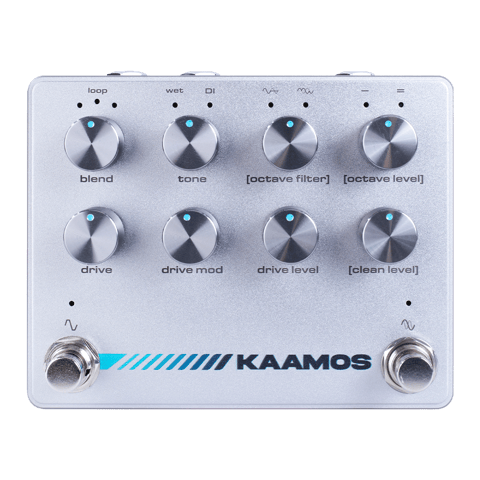
If you want more than a drive, the Darkglass Kaamos is the splurge. It pairs distortion with a sub-octave voice, adds flexible routing and an effects loop, and earned 4.5 out of 5 from MusicRadar. It costs far more and needs a beefier power supply, so it only makes sense if you will use those extras.

Everything we recommend

MXR Bass Distortion guitar pedal

Top pick · Best for bassists who want heavy, bass-voiced distortion in a small, affordable box

MXR Bass Distortion

The MXR Bass Distortion delivers thick, heavy dirt from a small analog pedal, and its blend knob keeps your low end intact underneath. But we would steer players who want detailed EQ elsewhere, since the blend is the only control its spec sheet calls out.

Darkglass Kaamos guitar pedal

Splurge pick · The step up if you want distortion and a sub-octave with flexible routing in one pedal

Darkglass Kaamos

The Darkglass Kaamos combines a bass distortion with a sub-octave voice, and MusicRadar gave it 4.5 out of 5 for both sounds. But we only recommend it if you will use the extras, since it is the priciest pick here and needs a 400 mA supply.

What you need to know

  • Who this is for

    This guide suits bass players who want heavier distortion while keeping a solid bottom end, from simple stompbox users to players who want octave effects and routing options. If you need stereo outputs, MIDI or presets, the Source Audio Aftershock or Source Audio Ultrawave (Bass), covered below, are better matches. If you want a DI output for going straight to a desk, consider the Ashdown Geezer Butler Pedal of Doom.

  • Simple drive or a multi-tool

    The MXR Bass Distortion is a compact stompbox with a blend knob, while the Darkglass Kaamos adds a sub-octave, a separate octave output and an effects loop. More features mean a bigger pedal and a higher price, so buy the extras only if you will use them.

  • Keeping the low end

    A blend or wet-dry mix lets you add clean bass back under the distortion, which keeps the bottom solid at high gain. The MXR Bass Distortion and the Source Audio Aftershock both offer one.

  • Power requirements

    The MXR Bass Distortion draws just 25 mA and can run on a battery, and the ZVEX Basstortion draws only 2 mA. The Darkglass Kaamos needs a 9V supply that can deliver 400 mA, which many shared pedalboard outlets cannot provide.

  • Board space

    The MXR Bass Distortion measures 62 x 32 x 108 mm and weighs 380 g, so it fits almost anywhere. The Ashdown Geezer Butler Pedal of Doom, at 180 x 60 x 120 mm and 1200 g, takes up a lot more room.

  • How we picked

    We looked at every pedal that fits this guide and is on sale new today, then ranked them by what reviewers and buyers say, how many sources say it, and what it costs. The full method is here.

  • What we do not do

    We do not test pedals. Everything here comes from published reviews, retailer ratings and player discussion, so you can follow it back to its sources.

How we researched this guide

PedalBro is an index of guitar pedals, not a testing lab. For this guide we gathered the published reviews, retailer star ratings and player discussion we hold for every pedal that fits, turned them into a single PedalBro score, and ranked the pedals on that score, how many sources stand behind it and price. A person reads every guide before it is published. 15 pedals fit this guide and 7 of them had a score we could rank.

MXR Bass Distortion guitar pedal

Top pick: MXR Bass Distortion

Best for bassists who want heavy, bass-voiced distortion in a small, affordable box

  • Analog
  • 62 × 32 × 108 mm
  • 9V DC

PedalBro score 82/100 · 1 source, medium confidence

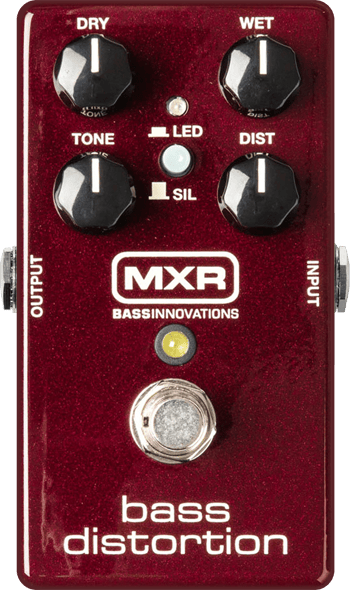
Reviewers rate it very highly. Premier Guitar gave the MXR Bass Distortion 5 out of 5 and singled out how much heavy distortion it produces. The pedal came out of a collaboration between MXR and Fuzzrocious and is made in the USA.

It solves the main problem with bass distortion. The blend knob mixes the clean signal back in alongside the dirty one, so the bottom of your tone stays full even when the gain is high. That makes it a better fit than a guitar drive for most bassists.

It is easy to live with and cheap for this list. It is among the lowest-priced pedals here, measures 62 x 32 x 108 mm, weighs 380 g and draws only 25 mA from a standard center-negative 9V supply. It can also run on a battery. The Darkglass Kaamos costs much more and needs 400 mA.

Flaws but not dealbreakers

Tone shaping looks limited. The spec sheet highlights the blend control and nothing else, so if you want to sculpt mids and treble in detail, the Source Audio Aftershock, with its parametric EQs, or the Ashdown Geezer Butler Pedal of Doom, with its active EQ, offers more.

Its strong rating rests on a single published review, so there is less outside opinion behind it than we would like. It is also voiced for bass, so guitarists looking for a drive should look elsewhere.

Who should skip it: Skip it if you want an octave effect, an effects loop or flexible routing alongside your drive, since the Darkglass Kaamos covers all three.
Darkglass Kaamos guitar pedal

Splurge pick: Darkglass Kaamos

The step up if you want distortion and a sub-octave with flexible routing in one pedal

  • 125 × 57 × 96 mm
  • 9V DC

PedalBro score 78/100 · 1 source, medium confidence

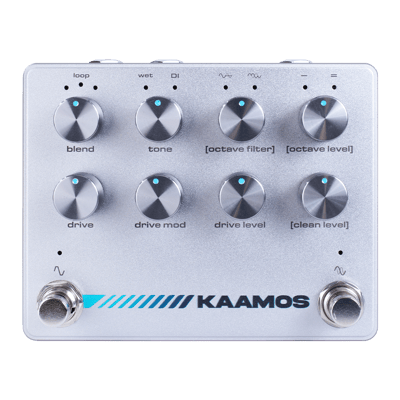
Reviewers liked both halves of the Darkglass Kaamos. MusicRadar rated it 4.5 out of 5, praised its octave sounds and called its overdrive warm and amp-like. The reviewer also called the circuit design clever and said it adds flexibility. Darkglass developed the pedal with session bassist Amos Heller.

It does far more than the MXR Bass Distortion. The octave signal has its own output, the distortion and octave can run in series or in parallel, and the built-in effects loop can sit in any of six positions. That lets you place other pedals exactly where you want them in the chain.

For a bassist who would otherwise buy a separate octave pedal and drive, it replaces two boxes with one. That is the case for paying more than you would for the MXR Bass Distortion.

Flaws but not dealbreakers

It is expensive. It sits among the highest-priced pedals on this list, and MusicRadar noted that it costs a lot even though it offers a lot. It is also larger and heavier than the MXR Bass Distortion, at 125 x 57 x 96 mm and 450 g.

MusicRadar wanted more range from its Tone knob. It also needs a 9V center-negative supply that can deliver 400 mA, so check your power supply before buying.

Who should skip it: Skip it if you just want a straightforward bass drive, since the MXR Bass Distortion does that for much less money and in less space.

Other pedals we considered

These did not make the top three, but some of them are the right choice for the right player.

  • Source Audio Aftershock

    If you want stereo, MIDI and presets on a budget: the Source Audio Aftershock is a digital bass distortion with three engines you can blend and two parametric EQs, and Premier Guitar rated it 4.5 out of 5. It costs about as little as the MXR Bass Distortion, but most bassists will prefer the simpler analog pick.

  • Source Audio Ultrawave (Bass)

    If you want to split your bass into many frequency bands and distort each one differently: the Source Audio Ultrawave (Bass) offers up to 37 bands and 44 distortion types, plus a compressor and LFO. It has no published review behind it here, and it is far more complex than most players need.

  • Ashdown Geezer Butler Pedal of Doom

    If you want a DI output and lots of EQ: the Ashdown Geezer Butler Pedal of Doom adds a transformer-isolated DI and an active EQ, and Guitar World gave it 4 out of 5 for its warm vintage sounds and very solid build. The same reviewer found the knob and footswitch layout awkward, and at 1200 g it is big for a pedalboard.

  • Fender Trapper Bass Distortion

    The Fender Trapper Bass Distortion pairs two separately voiced circuits that you can stack, and Premier Guitar rated it 4 out of 5. It is among the most expensive pedals here, and the MXR Bass Distortion scores higher for much less.

  • ZVEX Basstortion

    If you want an amp-style bass drive that sips power: the ZVEX Basstortion is an analog, US-made pedal aimed at the feel of a cranked Ampeg SVT, with a Bright/Dark switch and a draw of just 2 mA. Premier Guitar rated it 4 out of 5, but it has no stereo, MIDI or expression input, and the MXR Bass Distortion scores higher for less.

Questions people ask

Why does a bass distortion pedal need a blend control?

A blend control mixes clean bass back in with the distorted signal, so the low end stays solid when the gain is high. The MXR Bass Distortion and the Source Audio Aftershock both offer one.

Which bass distortion pedals can run on a battery?

The MXR Bass Distortion, Source Audio Aftershock, Source Audio Ultrawave (Bass), Fender Trapper Bass Distortion and ZVEX Basstortion are all listed as battery-compatible. The Darkglass Kaamos needs a 9V supply that delivers 400 mA.

Is there a stereo bass distortion pedal here?

Yes. The Source Audio Aftershock and the Source Audio Ultrawave (Bass) both have stereo inputs and outputs, along with MIDI and expression inputs. The ZVEX Basstortion is mono, with no MIDI or expression input.

Is the Darkglass Kaamos worth the extra money over the MXR Bass Distortion?

The Darkglass Kaamos is worth it only if you want a sub-octave, series or parallel routing and an effects loop alongside your distortion. For drive alone, the MXR Bass Distortion is much cheaper and Premier Guitar rated it 5 out of 5.

How were these bass distortion pedals chosen?

We looked at bass distortion pedals sold new that have at least one published review or retailer rating, and 7 of 15 qualified. We weighed their review scores, how many sources stood behind each one and where each sits on price. Each pedal here rests on a single published review.

Some buy links are affiliate links, so PedalBro may earn a commission when you buy, at no cost to you. As an Amazon Associate PedalBro earns from qualifying purchases. We do not take payment to rank or feature a pedal. Prices are the lowest new price we see now and change often: check the seller. How we rank